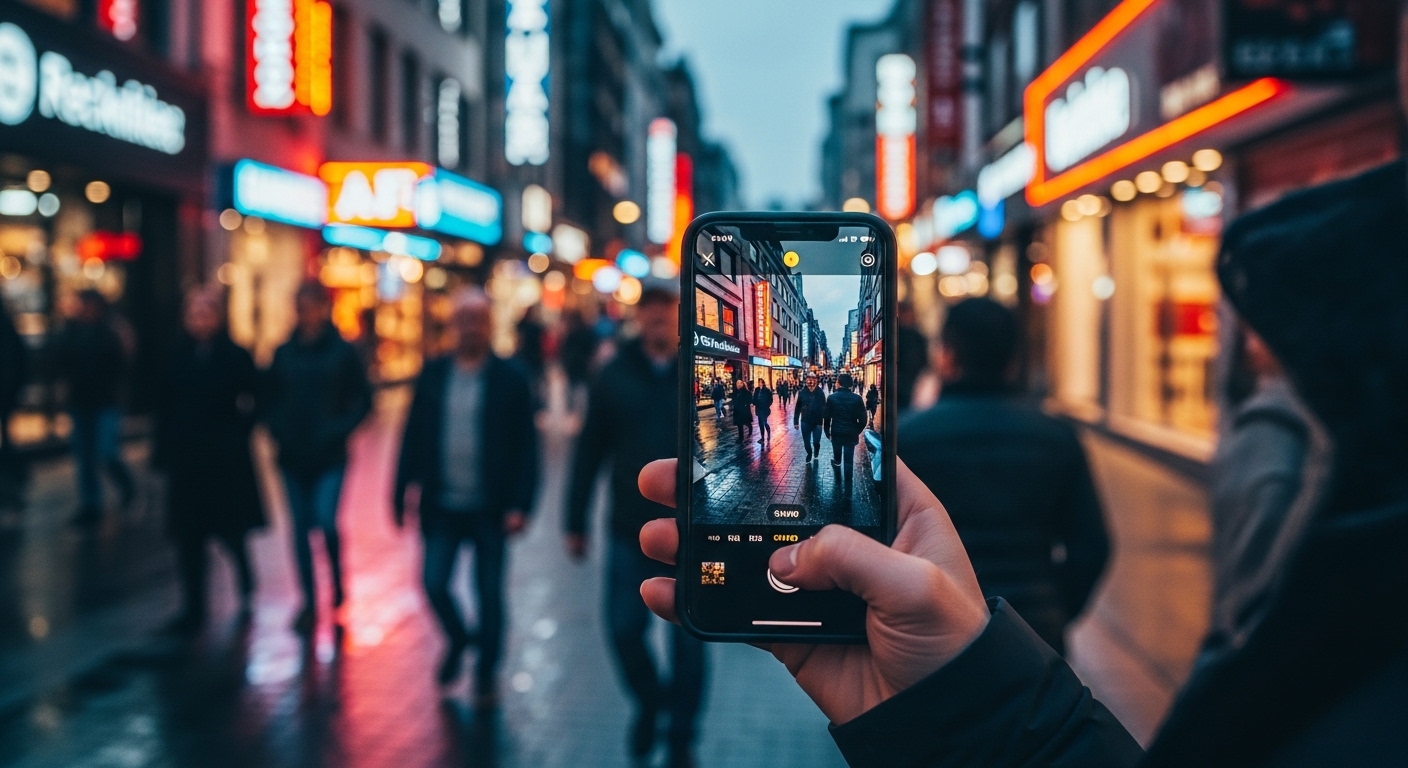
The street was alive in the way cities only are after dark—neon signs humming, footsteps echoing on wet pavement, conversations dissolving into motion. He lifted his phone without thinking, thumb hovering, letting the world compress itself into a glowing rectangle.
On the screen, everything looked sharper. Brighter. More important.
People walked past him in blurs of coats and shadows, but inside the phone they became characters—each step perfectly timed, each reflection on the pavement a streak of color like it had been painted on purpose. Red signs, blue lights, white storefronts melting into one another. The city wasn’t just happening anymore. It was performing.
He tapped record.
For a moment, he forgot where he was. The noise faded. The cold air disappeared. All that existed was the frame—vertical, narrow, intimate. A couple crossed the street laughing. Someone checked their reflection in a window. A stranger glanced straight into the lens, just for a second, as if they knew they were being remembered.
That was the danger of reels, he thought. They didn’t just capture moments—they trapped them.
The phone vibrated softly. A notification tried to pull him away, but he ignored it. This clip wasn’t for likes or algorithms. This one felt different. Honest. Like the city had leaned in and whispered, Don’t blink.
When he finally stopped recording, the street rushed back into him all at once. Sound. Motion. Reality. The people he filmed were already gone, swallowed by the night, unaware they now lived inside a few seconds of light and motion.
He slipped the phone into his pocket and kept walking.
Tomorrow, the reel would loop endlessly on someone else’s screen. But for him, it would always be this exact moment—the chill in the air, the glow of neon, and the quiet realization that sometimes the smallest frames hold the biggest stories.